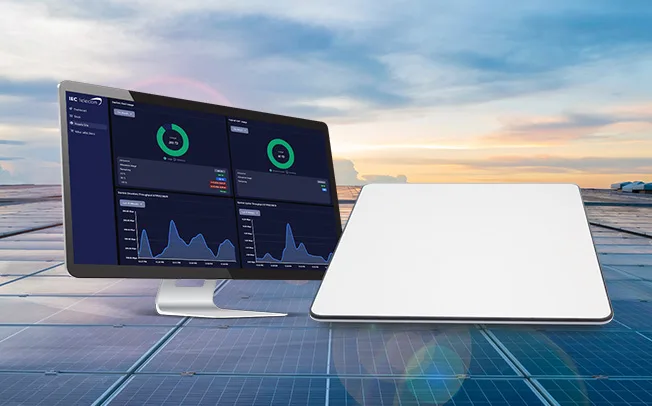


OptiView - Network Management
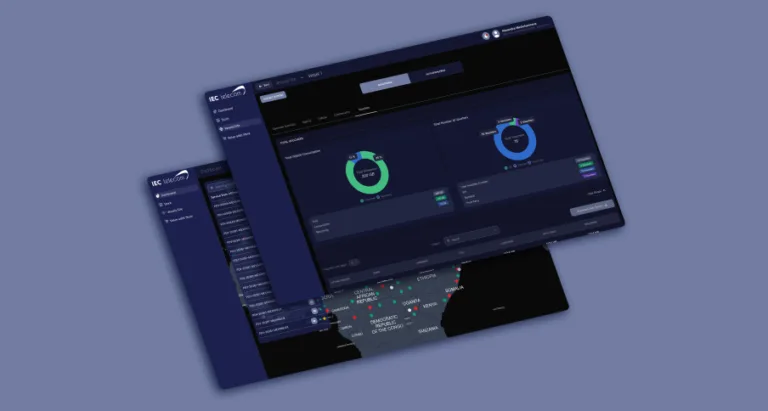
OptiView gives fleet managers centralised visibility and control over onboard connectivity, helping monitor network performance, bandwidth usage and connected services across vessels.
Learn MoreMerchant shipping runs on connectivity that holds up 4,000 miles from the nearest port. Container ships, tankers, bulk carriers and ro-ro fleets depend on ship-to-shore communication for navigation, chartering, compliance reporting and the crew welfare that keeps seafarers signing on again.
Modern shipping runs on data. Voyage optimisation, performance reporting, remote survey, planned maintenance, emissions monitoring and crew communication all depend on ship-to-shore communication that stays up. Connectivity has moved from a utility to an operational asset, one that now shapes fuel efficiency, compliance exposure and crew retention.
IEC Telecom delivers managed fleet connectivity built for commercial vessels, multi-orbit satellite links, centralised network control and 24/7 support. We combine multi-orbit connectivity (LEO, GEO, L-band and LTE) with enterprise-grade management tools, layered cybersecurity and round-the-clock technical support from regional offices across Europe, the Middle East, Asia-Pacific and North Africa. One partner, one managed environment, across the whole fleet.
IEC Telecom supports shipowners, ship managers and merchant vessel operators running fleets of every size. Whether you manage five vessels or five hundred, the connectivity environment scales without adding headcount ashore.
Our portfolio addresses both sides of the vessel. Fleet and IT managers get centralised network visibility, policy control, cybersecurity and performance monitoring. Seafarers get controlled internet access, flexible data allowances and a digital experience that stands up against life ashore, increasingly a deciding factor in where officers choose to sail.
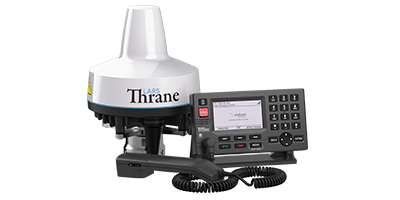
Fleet Vessels stay reachable when it matters most. IEC Telecom supplies and supports GMDSS-approved terminals alongside resilient satellite communications, covering distress alerting, safety traffic, emergency coordination and continuity of communication during incidents
Our engineers monitor vessel networks continuously, diagnose remotely and resolve most faults without an attendance onboard. Proactive alerting catches degradation before it becomes downtime, and support runs every day of the year in local time zones through our regional operations centres.
Enable smarter fleet operations through continuous visibility of vessel connectivity and network performance. Real-time analytics, usage monitoring and remote management empower fleet managers to optimise bandwidth, enforce corporate policies and support data-driven operational decisions across every vessel.
Reliable ship-to-shore communication keeps merchant vessels connected with fleet offices, port authorities, agents and operational teams throughout the voyage. Secure, consistent connectivity supports real-time coordination, reporting, route updates, documentation and faster decision-making between vessel and shore. IEC Telecom supports these operations through managed satellite and hybrid connectivity solutions, helping vessels maintain reliable communications wherever they operate.
Protect onboard digital infrastructure with enterprise-grade cybersecurity and intelligent network management. Through OptiView, fleet managers gain near-real-time visibility into vessel networks. OptiShield adds Data Loss Prevention, automated endpoint verification, sandbox analysis and dashboard visibility, the network-level controls that support IMO cyber risk management obligations and IACS UR E26 and E27 requirements.
Hybrid Connectivity combines multiple network technologies, including LEO, GEO, LTE and backup links, into a single managed connectivity environment. It enables shipping companies to maximise service continuity, reduce reliance on a single network and support both operational communications and crew welfare across the fleet.
The solution intelligently prioritises mission-critical business applications while routing non-critical traffic through the most suitable available network, ensuring optimal performance and efficient bandwidth utilisation.
Best for: resilient fleet connectivity, backup communications, traffic prioritisation, business continuity and multi-network maritime operations.
Data Pool helps shipping companies manage data usage across multiple vessels within a fleet. Instead of assigning data allowances separately to each vessel, operators can share available data across the fleet with centralised allocation, monitoring and reporting.
This helps reduce unused capacity, improve cost visibility and make better use of available bandwidth by directing data where it is needed most.
Best for: multi-vessel fleets, shared bandwidth allocation, cost control, usage reporting and budget predictability.
IEC Welfare is a recommended solution for shipping companies looking to enhance crew connectivity and wellbeing at sea. It provides reliable, managed internet access for seafarers while giving operators greater control over usage, bandwidth and onboard connectivity.
It helps crews stay connected with family and friends while supporting a better onboard experience and stronger crew satisfaction. IEC Welfare is delivered on OptiView, our network management ecosystem, and integrates OptiShield for threat protection and data loss prevention.
Best for: crew welfare, controlled internet access, fair usage policy, corporate allowances and fleet-wide cost visibility.




OptiView gives fleet managers centralised visibility and control over onboard connectivity, helping monitor network performance, bandwidth usage and connected services across vessels.
Learn More
OptiShield helps secure vessel connectivity by protecting onboard systems, connected devices and business-critical applications from cyber threats. It strengthens network security across the vessel and reduces exposure to digital risk, supporting safer and more resilient maritime operations. Capabilities include Data Loss Prevention, automated endpoint verification, sandbox analysis and dashboard visibility, with an optional 24/7 cyber response team.
Learn More
IEC Voucher Management System combines centralised fleet control with a simple self-service experience for crew. Fleet managers can manage allowances, policies and usage, while crew members can activate their allocation, monitor consumption and purchase additional data bundles , helping balance crew welfare with connectivity cost control.
Learn MoreShip-to-shore communication is the exchange of voice and data between a vessel and its shore-based management, port authorities and service providers. On merchant vessels it now covers far more than voice: performance and noon reporting, chart and software updates, planned maintenance data, remote survey, cargo documentation and crew communication all travel over the same managed satellite link.
Most merchant fleets run a hybrid setup: a high-throughput LEO or VSAT service for operational and welfare traffic, with L-band as guaranteed backup and LTE in port. Add network management, cybersecurity and a crew welfare platform, and the vessel has a complete communications environment.
Hybrid connectivity runs several networks under one managed router with automatic failover. If the primary link degrades, traffic moves to the next available path without manual intervention, and critical applications keep priority — so operations continue even when one network is unavailable.
Yes. Operational and welfare traffic are separated at network level, with bandwidth and policy controls applied to each. Crew receive their own allowances through the voucher system, and business-critical applications retain guaranteed priority regardless of onboard usage.
IMO requires cyber risk to be addressed within the safety management system, and IACS Unified Requirements E26 and E27 set cyber resilience requirements for ships contracted for construction on or after 1 July 2024. Practically, fleets need network segmentation, controlled remote access, monitoring and evidence of policy enforcement.
No. Satellite internet is the raw link. Managed fleet connectivity adds the layer that commercial operators need: multi-network failover, traffic prioritisation, cybersecurity, usage policy, crew allowances, central reporting and 24/7 support. A vessel can have fast internet and still have no control over how it is used or protected.
Installation is scheduled around your trading pattern through our regional offices and global partner network, covering shipment, installation, commissioning, testing and handover. Technical support runs 24/7, 365 days a year, online and by phone.