



User Terminal
The Starlink terminal connects the site, vehicle or vessel to the satellite network.
Reliable connectivity for remote, mobile and maritime operations.
Business-grade internet for data-intensive applications.
Responsive connectivity for cloud platforms and real-time communications.
Professional deployment, integration and ongoing technical support.
Starlink extends high-speed satellite internet to locations where terrestrial connectivity may be limited, unavailable or difficult to deploy.
IEC Telecom adds the expertise required to turn connectivity into an operational solution — from selecting the appropriate hardware and Starlink plan to installation, network integration and ongoing support.
Whether connecting a remote business site, mobile team or vessel, we help configure Starlink around your operational requirements.

A professional Starlink deployment involves more than hardware and connectivity. IEC Telecom supports the complete deployment lifecycle, helping organisations select, install, integrate and manage Starlink within their wider communications environment.
Assess the location, operating environment and connectivity requirements.
Select the appropriate Starlink hardware and service plan.
Integrate Starlink with existing networks and communications infrastructure.
Ongoing technical and connectivity support throughout the deployment.
Starlink uses a low Earth orbit satellite network to deliver high-speed, low-latency internet connectivity across supported fixed, mobile and maritime environments.
The Starlink terminal connects the site, vehicle or vessel to the satellite network.
The network provides connectivity across supported service areas.
Traffic is routed through supporting ground infrastructure.
Users connect to cloud platforms, communications tools and operational systems.

Support vessel operations, cloud applications and crew connectivity across shipping routes.

Reliable connectivity for offshore platforms, support vessels and remote maritime teams.

Operational communications and crew connectivity for vessels working far from shore.

Connectivity for vessel operations, guest services and onboard digital experiences.

Rapid connectivity for field teams, relief operations and temporary response sites in remote areas.

Reliable connectivity for remote energy sites, field operations and critical business applications.

High-speed connectivity for remote mine sites, operational teams and connected equipment.

Deployable connectivity for emergency teams operating where terrestrial networks are limited or disrupted.

Business-grade connectivity for remote offices, mobile teams and locations beyond fixed infrastructure.
Starlink availability varies according to country, regulatory requirements and service type. Fixed, land mobility and maritime services may have different availability conditions depending on where the terminal will operate.
Use the Starlink availability map to review current coverage and confirm availability before planning a deployment.
Service availability depends on the country where the terminal operates and applicable local regulations.
Maritime service extends across major shipping and sailing routes, subject to service availability and regulatory requirements.
Connectivity within territorial waters may be subject to the regulations of the relevant coastal state.
Availability and licensing conditions can change. Confirm coverage before committing to a site, route or deployment.
Starlink availability differs by country and may depend on licensing, local regulations and the type of service required.
Select your operating region to review availability, or contact IEC Telecom to confirm whether Starlink can be deployed for your business site, land mobility operation, vessel or route.
No countries match your search.
Tell us the country or the route. We confirm the regulatory status, recommend the kit and plan, and handle the order end to end.
Availability, service conditions and deployment requirements can vary between markets.
Explore IEC Telecom’s regional Starlink guides for country-specific information on availability, business applications and deployment requirements.
Starlink pricing depends on the selected hardware, service plan, location and deployment requirements.
For professional deployments, the total Starlink cost may include the terminal and accessories, installation and the applicable monthly Starlink internet plan.
The selected Starlink terminal and any required mounting equipment or accessories.
Professional setup, configuration and network integration where required.
Recurring connectivity based on the selected Starlink plan, operating location and service requirements.
For accurate Starlink pricing, IEC Telecom can recommend a suitable configuration based on your deployment.
IEC Telecom supports Starlink deployments from initial requirements assessment through installation, activation and network integration.
Our team can help determine the appropriate hardware setup, configure the service, test connectivity and integrate Starlink into your wider communications environment.
Review the location, operating environment and connectivity requirements.
Select the appropriate Starlink hardware, service plan and network configuration.
Deploy and configure the terminal for the operating environment.
Provide ongoing technical and connectivity support following activation.
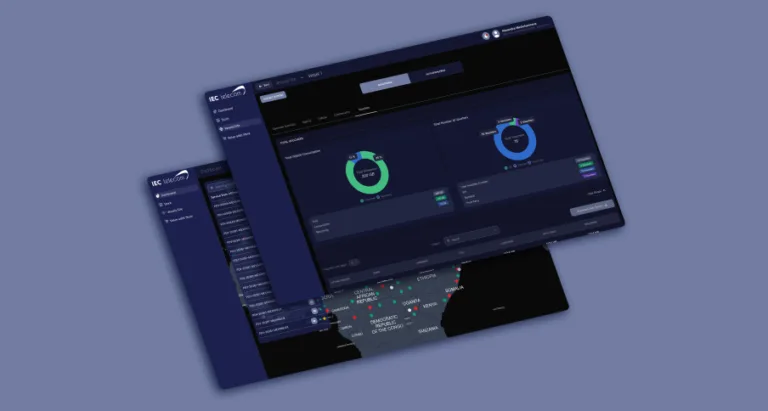
Starlink provides high-speed connectivity. IEC Telecom adds the management, visibility and value-added services required to support professional operations across business sites, land mobility environments and vessels.
Monitor connectivity performance and gain greater visibility across your network.
Add additional cybersecurity and network protection capabilities.
Manage bandwidth and prioritise critical applications and services.
Combine Starlink with L-band, GEO satellite or terrestrial networks where additional resilience is required.
Manage connectivity across distributed locations, remote operations or fleets.
Access ongoing support throughout the connectivity lifecycle.
Tell us where you operate and what you need to connect. Our experts will help identify the right solution for your operations.


