
Across Asia, digital transformation is accelerating at an unprecedented pace. Governments are expanding 5G, enterprises are investing in automation, and industries such as maritime, energy, logistics, and infrastructure are becoming increasingly data-driven.
Yet geography remains one of Asia’s biggest connectivity challenges.
From the archipelagos of Southeast Asia to the remote inland regions of Central Asia, businesses operate in environments where terrestrial networks alone cannot guarantee continuity. Fiber routes can be disrupted. Mobile networks face congestion. Natural disasters regularly impact infrastructure resilience.
As a result, a strategic shift is taking place: organisations are moving from single-network dependence toward multi-orbit connectivity architectures.
Coastal fibre and 5G infrastructure in Malaysia, Singapore and Indonesia are world-class. But once vessels move beyond coastal range, connectivity depends entirely on satellite.
For decades, operators relied primarily on single-orbit GEO systems. While reliable, they were not designed for today’s data-heavy applications.
Now, maritime operations across Asia are becoming:
According to regional studies, high-impact outages in ASEAN can cost up to US$2.5 million per hour. In this environment, connectivity architecture becomes a risk management decision, not just a bandwidth purchase.
The industry is no longer asking which satellite orbit is best. The real question is how to combine them intelligently.
GEO continues to provide stable, wide-area coverage across long Asian sea routes. LEO introduces low latency and high throughput, enabling real-time applications previously impractical at sea. MEO can support regional balance where required.
Instead of selecting one, leading operators now layer them.
This layered approach ensures:
Multi-orbit is not about replacing legacy systems. It is about aligning each orbit to the role it performs best.
Indonesia’s thousands of islands, Malaysia’s extensive maritime trade routes, and Singapore’s position as a global shipping hub create a shared challenge: connectivity must follow the vessel, not the coastline.
Hybrid satellite architectures are becoming foundational infrastructure in these markets.
In Indonesia, digitalisation initiatives increasingly rely on always-on vessel communications. In Malaysia, platforms like MMSW require reliable offshore bandwidth to function in real operational conditions. In Singapore, maritime operators expect enterprise-grade performance even in transit.
Across the region, the move toward hybrid connectivity is no longer experimental — it is operational.
Low Earth Orbit (LEO) satellite technology has introduced a high-performance layer into Asia’s connectivity landscape. Through its dedicated solutions for both maritime and land operations, IEC Telecom integrates Starlink as part of a broader hybrid architecture rather than deploying it in isolation.
For maritime environments, Starlink enhances vessel connectivity with low-latency broadband that supports cloud-based fleet management, real-time reporting, video collaboration, and crew welfare services.
For land-based enterprise environments, Starlink provides high-speed connectivity in remote locations and functions as a resilient backup layer for fiber or 4G/5G networks.
However, the true value of LEO connectivity is realised when it is architected into a managed, multi-layer environment.
Deploying multiple satellite systems does not automatically create resilience. Without intelligent routing, visibility, and failover logic, multi-orbit setups remain fragmented.
IEC Telecom supports both maritime and land operations across Asia by designing structured hybrid architectures that combine:
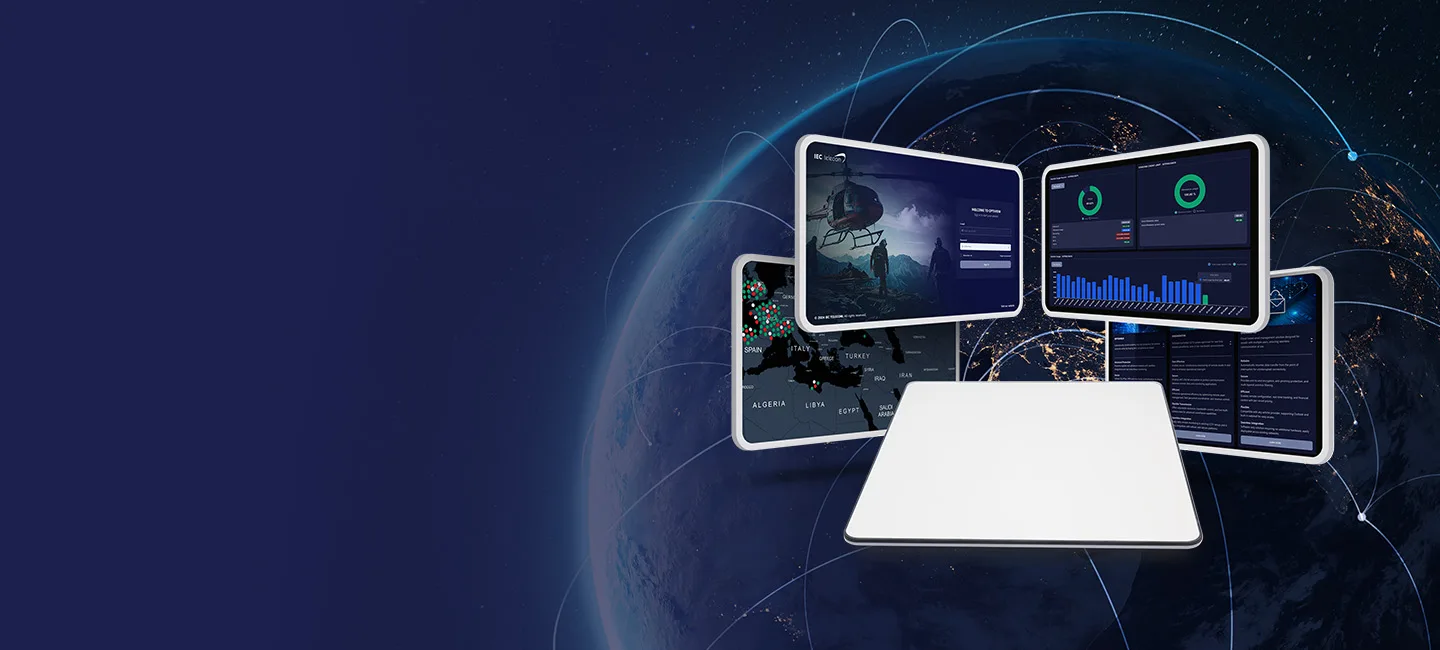
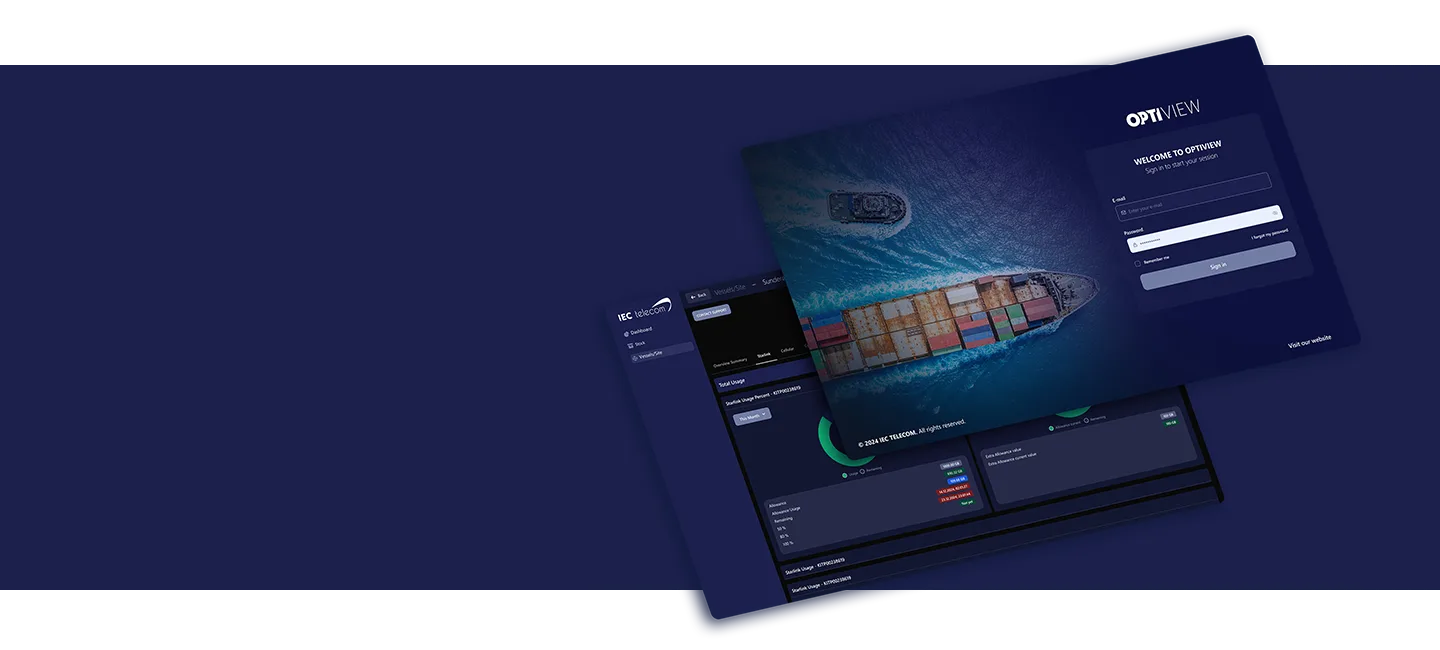
Through network optimisation and performance monitoring tools such as OptiView, operators gain real-time visibility across all active links – regardless of provider or orbit
As an independent network management platform, OptiView can integrate multi-orbit satellite services even when they are not sourced from a single provider. For example, an operator maintaining an existing GEO contract with another provider can still deploy Starlink as a high-performance LEO layer, while managing both networks seamlessly through OptiView.
Traffic is dynamically prioritised, and automatic failover ensures that if a 5G, LTE, or fiber connection fails, satellite backup activates seamlessly.
This approach transforms satellite connectivity from a standalone link into a managed resilience framework.
It is important to distinguish between orbit types and frequency bands.
GEO, MEO and LEO describe orbital positions. L-band refers to a frequency band commonly used in highly resilient satellite services.
While not designed for broadband performance, L-band remains critical in maritime safety and continuity planning. During severe weather or primary link disruption, it can function as a final safeguard layer.
In Asia’s weather-exposed maritime corridors, this additional reliable layer reinforces overall network stability.
Hybrid maritime architectures are not built to replace fibre or 5G. They extend them.
As vessels move between ports and the open sea, connectivity must transition seamlessly. Multi-orbit strategies ensure that performance does not collapse once terrestrial coverage fades.
In this sense, satellite is no longer an alternative network, it is an integrated extension of Asia’s digital infrastructure.
Multi-orbit connectivity strategies are no longer theoretical discussions in Asia’s maritime sector. They are already supporting some of the busiest trade routes in the world.
By combining GEO stability, LEO performance, intelligent network management through OptiView, and strategic L-band reliable backup, operators can transform fragmented satellite setups into structured, future-ready connectivity environments.
As Asia continues to digitise its maritime economy, the question is no longer whether to adopt hybrid satellite architectures, but how intelligently they are designed.
A multi-orbit connectivity strategy is the integration of multiple satellite orbits, typically GEO, MEO, and LEO, into a single managed network. Instead of relying on one satellite system, each orbit performs a specific role. When combined with terrestrial networks like fiber and 5G, it improves resilience, performance, and business continuity.
Multi-orbit connectivity is important in Asia because of the region’s island geography, vast maritime routes, remote inland operations, and exposure to extreme weather. While urban areas have strong fiber and 5G coverage, offshore and remote environments depend on satellites. Multi-orbit designs reduce downtime risk and improve operational stability.
LEO satellites, such as those in the Starlink solution for land and maritime, provide low-latency, high-speed broadband. In a multi-orbit architecture, LEO typically supports real-time applications like cloud access, remote diagnostics, and video communication, while other orbits provide stability and redundancy.
GEO, MEO, and LEO refer to satellite orbital positions at different altitudes. GEO provides wide coverage, MEO balances coverage and latency, and LEO delivers low latency and high throughput. L-band is not an orbit — it is a frequency band known for high reliability and weather resistance, often used for safety or backup communications.
No. Multi-orbit connectivity complements fiber and 5G rather than replacing them. Terrestrial networks remain primary in urban areas, while satellite layers extend coverage offshore, into remote zones, and provide redundancy during terrestrial outages.
Industries operating beyond stable terrestrial coverage benefit most, including maritime shipping, offshore energy, mining, disaster response, logistics, and remote infrastructure projects. These sectors require continuous connectivity across changing geographies.
Network management platforms optimise how traffic moves across different satellite and terrestrial links. Tools like OptiView provide real-time monitoring, intelligent routing, bandwidth control, and automatic failover, ensuring the network adapts dynamically to demand and conditions.
IEC Telecom designs multi-orbit architectures by combining Starlink LEO services, GEO satellite systems, terrestrial links, and L-band backup into a unified managed environment. Through integration expertise and network optimisation tools like OptiView, operators receive a structured, scalable, and resilient connectivity framework.
Starlink provides high-speed, low-latency connectivity, but relying solely on one network may not ensure full resilience. In maritime environments exposed to congestion, weather, or regulatory requirements, integrating Starlink within a hybrid multi-orbit architecture strengthens continuity and redundancy.
L-band offers highly reliable, weather-resistant communication. While not designed for high bandwidth, it functions as a continuity layer during severe weather, congestion, or primary link failure. In Asia’s monsoon and typhoon-prone waters, it strengthens overall network resilience.
Multi-orbit connectivity reduces outage risk, improves operational continuity, supports regulatory compliance, and enables digital transformation across maritime and remote sectors. It shifts connectivity from a single-link dependency to a structured risk-managed infrastructure.