
When it comes to connectivity infrastructure, Malaysia shows a distinct digital divide. Kuala Lumpur and Penang rank among the most digitally advanced cities, operating on dense fibre networks, expanding 5G corridors, and strong mobile coverage. But the situation changes when you move away from these urban centres. Reliable internet is still not uniformly available in East Malaysia’s rainforests, remote river settlements, offshore platforms, and the busy shipping routes.
National coverage statistics appear strong on paper, with populated area coverage hitting 99.71% by the end of 2025. But gaps remain across regions where terrain and distance make terrestrial rollout impossible and expensive. Starlink Malaysia is changing this scenario. Instead of ground-based towers and cables, Starlink uses low earth orbit satellites. It effectively bridges the gap created by fibre limitations and remote connectivity challenges, providing high-speed access to areas where traditional networks do not reach.
In July 2023, the Malaysian Communications and Multimedia Commission (MCMC) granted Starlink an operating licence, making it one of the first LEO satellite providers to receive formal regulatory approval in the country. The decision aligned directly with the government’s National Digital Network Plan (JENDELA), an initiative launched in 2020 to ensure universal broadband access and phase out 3G networks across Malaysia’s populated areas by 2025. Starlink’s entry was positioned not as competition to terrestrial networks, but as a tool to reach where those networks cannot.
Starlink Malaysia fills the connectivity gaps left by fibre and mobile networks. Instead of relying on distant geostationary satellites, it operates through Low Earth Orbit satellites positioned about 550 kilometres above the surface. That shorter distance reduces latency to around 25 to 50 milliseconds and supports speeds of up to 400 Mbps. LEO satellite Malaysia coverage extends across inland estates, offshore platforms, and major maritime routes, creating consistent access across land and sea.
The real advantage goes beyond raw speed. Enterprises, vessel operators, and public institutions depend on stable links, network visibility, and secure data control. Connectivity must support daily operations, safety systems, and remote coordination without disruption. The true impact of Satellite internet in Malaysia is determined by how it complements terrestrial infrastructure, enabling digital inclusivity nationwide.
As an authorised Starlink partner since 2022, IEC Telecom Group delivers not just hardware but fully managed and secure connectivity environments. Based on deep understanding of APAC market, proven by nearly 20 years of local presence, , and advanced network management capabilities, we provide scalable, monitored solutions well-suited for the operational demands of Malaysian enterprises, maritime operators, and institutions.
Across Malaysia, the impact of Starlink is already being seen in sectors where connectivity was once a persistent operational challenge. Read on to learn where Starlink is making the most meaningful difference, and why managed satellite connectivity is becoming a strategic priority for Malaysian enterprises and institutions.
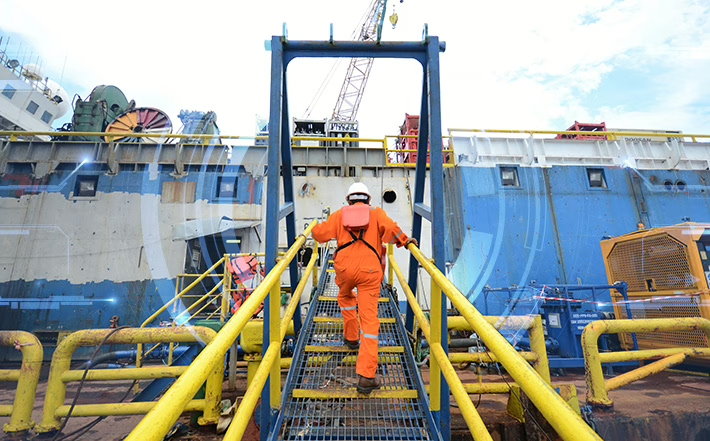
Malaysia’s offshore oil and gas sector depends on uninterrupted data flows for real-time monitoring, safety sensor networks, and remote asset management across platforms in Malaysian waters. Starlink provides the throughput and low latency required to support these operations reliably, even in areas far from coastal infrastructure.
On land, large plantations and mining concessions across Sabah, Sarawak, and Peninsular Malaysia face similar limits. Traditional networks are not available consistenly across vast estates. Starlink Malaysia for business provides:
Satellite internet in Malaysia now functions as a core operational tool, not a backup solution.
Malaysia is frequently challenged by flooding, landslides, and tropical storms. These events often disrupt fixed-line and mobile infrastructure at the moments when business and mission continuity are most critical.
Starlink’s rapid-deployment capability addresses these challenges by offering:
Fibre broadband performs exceptionally in dense urban environments in Malaysia. But in the remote eastern regions such as Sabah and Sarawak, settlements are often separated by rivers, dense forest, or hours of road travel, creating a digital divide for rural internet in Malaysia.
The potential of Starlink in these areas was demonstrated clearly in 2023, when proof-of-concept deployments at UiTM campuses and remote clinics delivered speeds of 100 Mbps or more to locations that had never had reliable internet before. These examples signal a shift in what is achievable for underserved communities with high-speed satellite connectivity in Malaysia, such as:
Malaysia’s maritime sector is central to its economy. The Strait of Malacca is one of the world’s busiest shipping lanes, and Malaysian-flagged and Malaysian-based vessels operate across a wide range of routes, from coastal waters to international sea lanes. These vessels have traditionally relied on GEO satellite systems, which are capable, but often limited in throughput and high in latency.
Starlink Maritime changes this. High-speed, low-latency connectivity supports real-time operational monitoring, route optimisation, remote diagnostics, and communications between vessel and shore in a way that older GEO systems could not match. IEC Telecom Malaysia delivers this not as a standalone service, but as part of a fully managed solution for maritime and offshore connectivity in Malaysia, integrating Starlink with hybrid multi-network configurations, cybersecurity protocols, and advanced network management through OptiView.
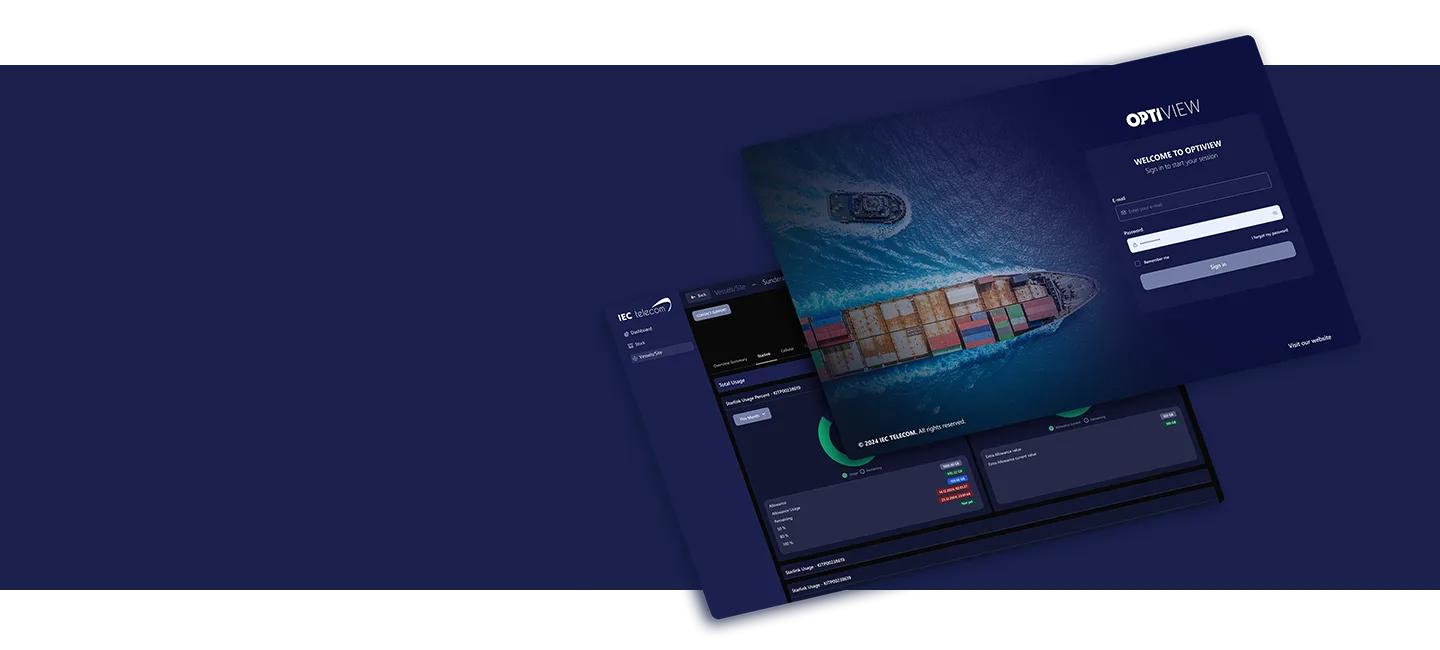
OptiView, IEC Telecom’s proprietary value-added service, gives vessel operators and shore-based IT teams complete visibility across all active connections in real time. Network performance metrics, such as uplink and downlink speeds, signal quality, and latency, are tracked continuously for every link. Administrators can set data usage thresholds, configure automatic suspension to prevent overconsumption, and manage network segmentation to keep operational and crew networks separate. For vessels navigating regulatory environments across different maritime zones, OptiView’s centralised control simplifies compliance and ensures continuity.
For Malaysian seafarers spending months at sea, reliable personal internet access is vital for morale, mental well-being, and even retention. The maritime industry in this region has seen growing demand for structured crew welfare programmes that go beyond simply providing a shared Wi-Fi connection.
IEC Telecom’s Voucher System addresses this with a practical, structured approach.
The long-term connectivity architecture for Malaysia will be built on multiple layers. Fibre will remain the primary infrastructure in urban and peri-urban areas, being cost-effective, high-capacity, and well-suited to dense populations. But where fibre ends, satellite begins.
Hybrid models combining LEO satellite, GEO backup, and LTE will define how Malaysia’s more remote and mobile sectors stay connected. Starlink will not replace fibre in Malaysia. What it does is close the connectivity gap reliably, at scale, and in places where terrestrial infrastructure cannot reach. For enterprises, maritime operators, and communities across land and sea, that gap has been too wide for too long.
Starlink internet cost in Malaysia usually includes hardware cost (one-time) and a monthly subscription fee. The exact price depends on usage requirements and service plan. Businesses can choose managed solutions from providers like IEC Telecom, which include installation, network management, and support in addition to connectivity.
Yes, Starlink is fully licensed and legally operational in Malaysia. The Malaysian Communications and Multimedia Commission (MCMC) has approved satellite broadband services, and commercial users can procure and operate Starlink equipment under the current regulatory framework. This regulatory clarity brings a significant opportunity for businesses and industries aiming to incorporate satellite connectivity in their infrastructure strategy.
Yes, Starlink operates on a monthly subscription model after the initial hardware purchase. Users pay a recurring fee for ongoing internet access, with no long-term contract required in most cases.
As of March 2026, Starlink does not offer unlimited plans for B2B customers. All plans operate under a Fair Use Policy: once the data threshold is reached, speeds are reduced, but connectivity continues until the end of the billing cycle. Customers seeking an uninterrupted experience may enable automatic top-ups once the threshold is exceeded. Pricing and terms vary by package.
IEC Telecom enhances Starlink services with customised plans, advanced usage monitoring, centralised billing across multiple accounts, and 24/7 technical support.
Internet speeds in Malaysia are generally high in major cities, with widespread fibre and growing 5G coverage. However, speeds can vary significantly in rural or remote regions where infrastructure is limited. Satellite connectivity is helping bridge this gap by extending broadband access beyond urban centres.
Starlink’s main advantages include:
Potential limitations include:
For businesses, managed solutions can help optimise reliability and performance.