


CONTACT US

Satellite Internet for Remote Operations

Satellite internet provides reliable connectivity for businesses operating in locations where fibre, telephone lines, or other terrestrial networks are unavailable, unreliable, or too expensive to install. It enables remote sites, mobile teams, and critical operations to access the internet without depending on a conventional fixed connection at the location.

Traditional internet access typically depends on infrastructure such as:

  • Fibre-optic cables
  • ADSL or VDSL
  • Telephone lines
  • Cable broadband

Satellite internet provides an alternative by delivering connectivity through satellites rather than relying on cables extended to the site. In Türkiye, this type of connectivity may also be described as “altyapısız internet”, particularly when referring to internet access in locations without conventional fixed infrastructure.

Because a new fibre or cable connection does not need to be extended to the site, satellite internet can often be deployed more quickly in remote or temporary locations.

How Does Satellite Internet Work in Areas Without Terrestrial Infrastructure?

Satellite internet uses a terminal installed at the customer’s location to communicate with a satellite in orbit. This creates a connection between the remote site and the wider internet without depending on local fibre or telephone infrastructure.

Different satellite technologies can support different operational requirements:

  • GEO satellite networks offer wide coverage and established connectivity for remote operations.
  • LEO satellite networks can provide high-speed, lower-latency broadband.
  • L-band satellite services support reliable and resilient communication and can serve as an important backup connection.
  • Hybrid networks combine satellite and terrestrial services to improve availability and business continuity.

Satellite Connectivity Comparison

Connectivity type Main advantage Common role
GEO satellite Wide coverage and established service availability Permanent and remote operations
LEO satellite High-speed, lower-latency connectivity Data-intensive business applications
L-band satellite services Resilient connectivity using compact equipment Critical communications and backup
Hybrid connectivity Combines multiple available networks Business continuity and redundancy

The right technology depends on the location, operational requirements, available coverage, local regulations, and the applications that need to be supported.

Where Can Satellite Internet Be Used?

Satellite internet is particularly useful for organisations operating in remote, temporary, or challenging environments, including:

  • Construction sites and temporary project offices
  • Mining and energy operations
  • Rural businesses and agricultural facilities
  • Humanitarian and emergency-response missions
  • Government and defence operations
  • Transport and logistics facilities
  • Maritime and offshore operations
  • Remote monitoring stations
  • Critical facilities requiring backup connectivity

It can be used as the primary connection where terrestrial infrastructure is unavailable or as a backup solution when existing networks experience an outage. When combined with automatic failover, a backup connection can help reduce disruption and maintain access to critical applications during a terrestrial network outage.

What Determines Satellite Internet Prices?

Satellite internet prices generally include three main cost components:

  • Equipment: The cost of the satellite terminal, antenna, mounting equipment, and any required stabilisation system. Equipment requirements vary depending on whether the solution is fixed, portable, mobile, or maritime.
  • Installation and commissioning: This includes site assessment, equipment mounting, alignment, configuration, and testing. The cost depends on the location, operational environment, and complexity of the installation.
  • Service plan: The recurring cost of accessing the satellite network. Pricing may vary according to data usage, connection speed, coverage, required performance, and the selected satellite service.

The overall cost may also include network monitoring, cybersecurity, backup connectivity, maintenance, and technical support. As every operation has different requirements, satellite internet pricing should be based on the complete solution—not only the monthly service plan.


What Should You Consider When Choosing a Satellite Internet Company?

Choosing the right satellite internet company involves more than comparing connection speeds. Organisations should also consider geographic coverage, available satellite networks, equipment options, installation capabilities, network management, cybersecurity, technical support, and compliance with local regulations.

As an international satellite communications service provider, IEC Telecom supports the complete connectivity lifecycle—from assessing operational requirements and designing the right solution to supplying equipment, managing installation, securing the network, and providing global 24/7 technical support.

How Does IEC Telecom Help?

Establishing connectivity in a remote location involves more than selecting an internet package or installing a satellite terminal. The network must be designed around the organisation’s location, applications, users, security requirements, and operating conditions.

IEC Telecom helps organisations build a complete connectivity environment—from initial assessment and system design to installation, network management, cybersecurity, and ongoing technical support.

1. Assessing Operational Requirements

IEC Telecom assesses the customer’s location, coverage, users, applications, security requirements, and need for backup connectivity. This helps determine whether a satellite, terrestrial, or hybrid solution is most suitable.

2. Designing the Right Connectivity Solution

Based on this assessment, IEC Telecom designs a tailored solution using fixed or portable satellite systems, LEO, GEO, L-band, terrestrial networks, or a combination of technologies to balance performance, resilience, and cost.

3. Supplying and Deploying the Solution

IEC Telecom supports equipment supply, installation, activation, and configuration to bring remote sites online. Logistics, training, and maintenance services can also be provided to support reliable long-term operation.

4. Managing and Monitoring the Network

Providing a connection is only the beginning. Organisations also need visibility and control over how the network is being used.

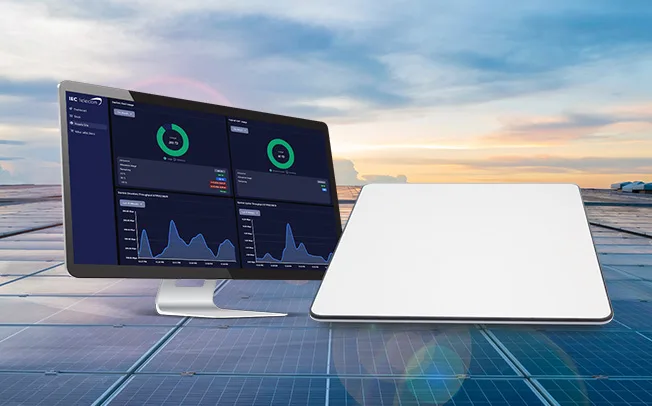
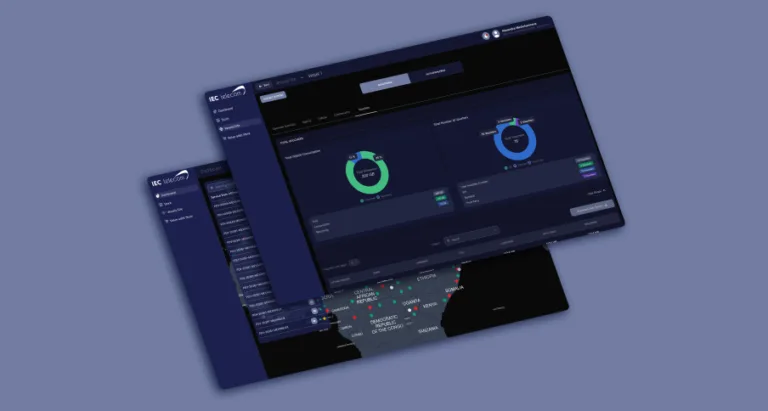
IEC Telecom’s OptiView platform supports smart network monitoring and management. It can help IT teams monitor network performance, connected devices, and data consumption across remote sites.

This visibility allows organisations to identify unusual activity, manage available bandwidth, and make better-informed decisions about network usage.

Where connectivity is shared among employees, contractors, guests, or crew, the IEC Voucher Management System can help organisations control user access and allocate data allowances.

5. Protecting Remote Connectivity

Remote sites can face cybersecurity risks just like conventional offices. In some situations, they may be more difficult for a central IT team to monitor and protect.

IEC Telecom’s OptiShield managed cybersecurity service supports network visibility, endpoint monitoring, threat reporting, and proactive risk management.

By combining connectivity with cybersecurity and network-management services, organisations can create a more controlled and secure environment for their remote operations.

6. Supporting Remote Teams and Operations

Once connected, organisations can use IEC Telecom’s value-added services to support more than basic internet access.

Depending on the operational requirement, these services may include:

  • OneAssist for real-time remote maintenance and virtual assistance
  • OneMonitor for remote surveillance and asset visibility
  • Traksat for push-to-talk communication, tracking, and IoT applications
  • OneMail Pro for email communication optimised for limited-bandwidth environments
  • OneHealth for remote access to telemedicine services
  • IEC Voucher Management for controlling user access and data allocation

These services help organisations improve operational efficiency, support remote workforces, increase asset visibility, and strengthen communication between remote sites and headquarters.

7. Providing Global Technical Support

Reliable support is critical when a remote site depends on connectivity for daily or mission-critical operations.

IEC Telecom provides global technical assistance for planned maintenance, unexpected outages, equipment queries, service activation, and satellite subscription support.

With regional expertise and global 24/7 technical support, IEC Telecom can help customers maintain their connectivity throughout the lifecycle of the solution.

From Satellite Internet to a Complete Operational Environment

Satellite internet is not simply about putting a remote location online. For businesses, it is about creating a reliable, secure, and manageable communication environment that supports people, applications, and operational processes.

IEC Telecom combines satellite and hybrid connectivity with network management, cybersecurity, digital services, installation, maintenance, and technical support.

Whether an organisation needs to connect a permanent remote facility, a temporary project site, a mobile team, or a critical operation, IEC Telecom can help design and manage a solution around its specific requirements.

Operating in an area without reliable terrestrial infrastructure? Contact IEC Telecom to discuss the right connectivity, managed services, and support for your operations.